
Revenge: A Never Ending Cycle of Violence
At some point, we were seduced into believing a damning lie.
That revenge heals.
That retaliation restores dignity.
That if we hurt back, something inside us will finally soften.
But revenge has never been medicine. It has always been a mirror reflecting the wound, not resolving it.
The Seduction of Revenge
There is something undeniably seductive about the idea of revenge.
It dresses itself as justice. As balance. As poetic closure.
“They hurt me, so I will hurt them.
They took something from me, so I will take it back.”
It feels righteous. Almost sacred.
But look closer.
Revenge does not come from clarity. It comes from injury dressed as power.
It is emotional, reactive, immediate.
And because it feels intense, we mistake it for strength.
But intensity is not strength.
It is simply unprocessed pain, asking to be expressed.

Vengeance never closes the wound
Vengeance never delivers what it promises.
It does not bring peace.
It does not restore innocence.
It does not undo what was done.
It keeps the wound alive.
Revenge is one of humanity’s oldest loops. It promises closure, dignity, and restored power. What it actually delivers is continuity.
Revenge does not heal the wound.
It keeps it relevant.
To seek revenge, you must stay connected to the pain.
You must rehearse it. Feed it. Justify it.
You become emotionally tied to the very thing that hurt you.
And so, instead of moving forward, you orbit the moment.
Again. And again. And again.
Revenge is not closure.
It is continuity.
Revenge does not end a story.
It extends it.
One moment of pain can be extended into generations.
And it only breaks when someone chooses something higher than reaction.
The Count of Monte Cristo and the Illusion of Revenge
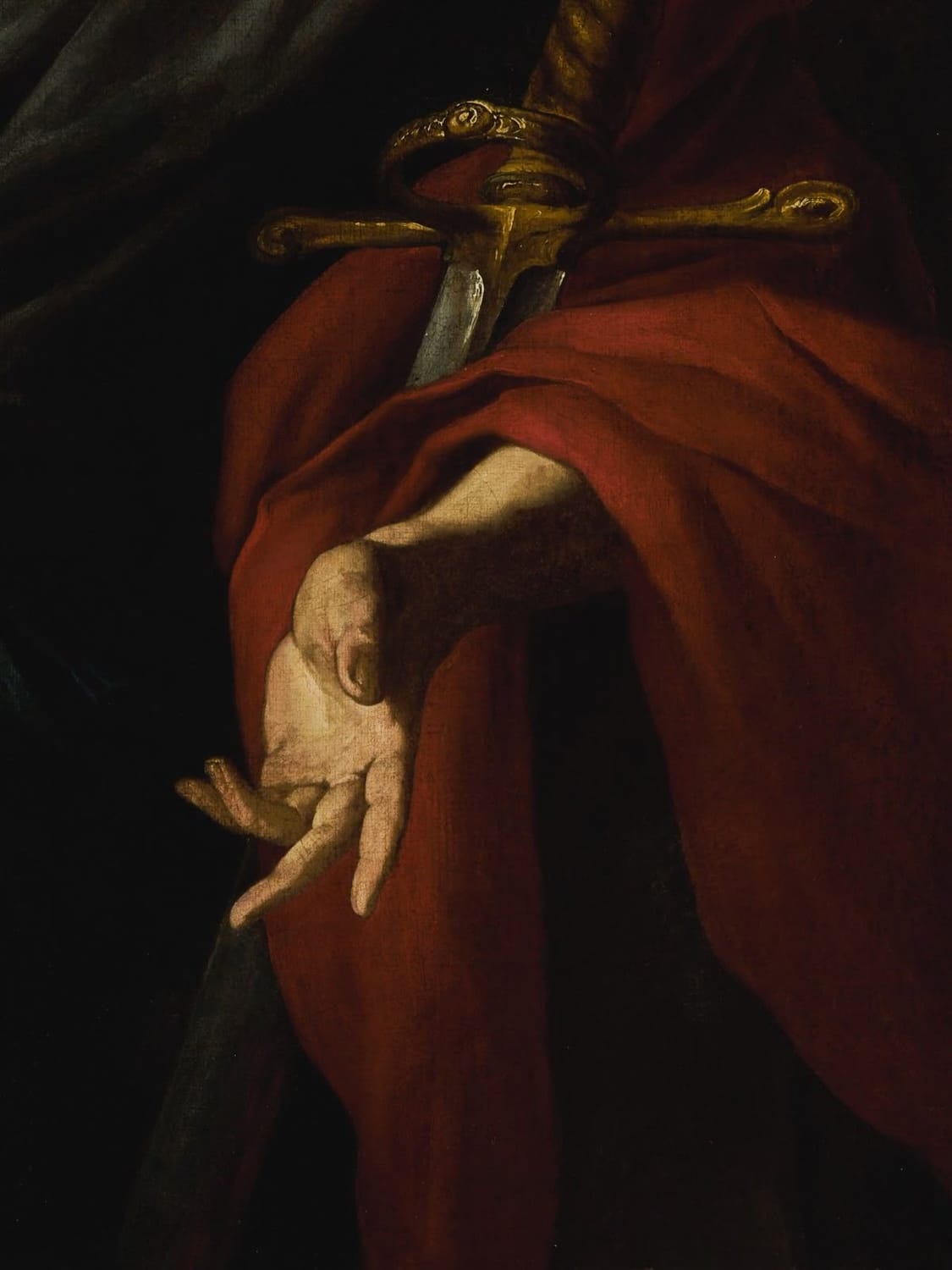
In Dumas' The Count of Monte Cristo, Edmond Dantès is wronged so profoundly that his transformation feels justified, even deserved.
He does not seek chaotic revenge.
He engineers perfect consequences.
Every betrayer falls by their own flaw.
Every punishment fits the crime.
Every outcome feels… clean.
And yet something rots beneath the elegance of his strategy.
Edmond slowly becomes isolated, godlike, untouchable.
He wins every external battle while losing something internal: his capacity to belong to life.
By the time he realizes innocent people are bleeding in the crossfire, the truth is unavoidable:
Revenge didn’t restore his innocence. It replaced it.
The Count’s final wisdom “Wait and hope” it’s regret refined into philosophy.
Revenge may give you control over the story… but never over its consequences.
Even the most elegant revenge cannot recover what was lost, it only rearranges the pain.
The Misconception of “Being Tough”
We were also taught something else.
That to be strong, we must be cold.
That to be powerful, we must be untouchable.
That to survive, we must not let anything go unanswered.
So we sharpen ourselves. We rehearse clever responses.
We imagine scenarios where we finally “win.”
We hold onto anger as if it protects us.
But this is not power.
This is pain trying to feel safe. Again, an emotional reaction.
True strength is not found in retaliation.
It is found in restraint, clarity, and self-possession.
The woman who needs to prove her power has already given it away.
The woman who holds it quietly cannot be provoked into becoming less than she is.

Vikings: Blood Remembers
A violent, masculine-coded culture also ritualized revenge.
Blood feuds were inherited. Honor demanded retaliation. Forgiveness was weakness.
And so sons avenged fathers, who had avenged brothers, who had avenged insults long forgotten. Violence became lineage.
What made this cycle especially lethal was not just social pressure, but cosmic permission.
Valhalla promised eternal glory to those who died violently. And then a heaven not of rest, but of endless battle, once again.
To die young, blade in hand, was triumph, not tragedy. The afterlife itself rewarded bloodshed.
But here’s the question history never asks out loud:
-----> What if they got tired? <-----
What if, after centuries of killing, the soul longed not for war but for silence?
The Viking ideal depended on dying before reflection set in.
Few lived long enough to contemplate consequence, legacy, or exhaustion.
Death in battle spared them from having to reckon with what endless violence costs the human spirit.
They believed revenge preserved order.
In reality, it guaranteed endless war, in life and in myth.
The Vikings didn’t collapse because they were fierce.
They collapsed because no one was allowed to stop fighting.
When a culture promises eternal violence as reward, peace becomes heresy.
Revenge became culture.
And culture became a cage.

Revenge vs. Divine Strategy
Revenge is emotional. Strategy is intentional.
Revenge reacts. Strategy observes.
Revenge is immediate. Strategy is patient.
Revenge seeks satisfaction. Strategy seeks alignment.
And most importantly:
Revenge is personal. Strategy is divine.
Real power does not rush, because it understands timing, consequence, and design.
It does not ask, “How do I hurt them back?”
It asks, “What is the highest outcome here?”
Sometimes that outcome is distance.
Sometimes it is silence.
Sometimes it is allowing life itself to respond.
Scripture’s Warning
Biblical narratives are often misunderstood as revenge stories, but they are, in truth, anti-revenge revelations.
“Vengeance is Mine,” says God, not as a threat, but as a boundary. Why?
Because humans cannot wield vengeance without becoming what they hate.
Cain kills Abel and is marked, not executed, so the cycle stops.
David spares Saul and breaks generational bloodshed.
Jesus interrupts retaliation entirely: “You have heard… but I say.”
The message is consistent and uncomfortable:
Justice belongs to truth. Revenge belongs to fear.
God & The Architecture of Justice
True justice doesn’t come from our own doing, but from a higher strategy. One that flows from the source of all creativity: Our Creator.
There is a reason every sacred system warns against revenge.
We are not designed to carry it out from a place of pain.
God is not emotional in His justice. He is precise.
He sees what we don’t. He understands timing we cannot grasp.
He responds in ways that restore order, not just ego.
God is the keeper of balance. Not our wounded reactions.
When we try to take revenge into our own hands, we interfere with a process far more intelligent than our perspective.
We reduce divine strategy to human impulse.
And in doing so, we often create more damage than the original wound ever did.

From Reaction to Refinement
Revenge feels powerful because it delays grief.
But grief, once faced, ends the war.
The moment you release revenge, something unexpected happens.
You are no longer controlled by what hurt you.
You no longer need the other person to suffer in order to feel whole.
You begin to refine yourself instead of rehearsing the past.
And that is where real power begins.
Because healing is not found in making others feel your pain.
It is found in no longer needing them to.
The body does not relax after revenge.
The soul does not exhale. It simply waits for the next threat.
Revenge will always offer you a role to play.
The one who responds. The one who balances.
The one who proves something.
But there is a higher path.
The one who observes. The one who discerns. The one who trusts.
Revenge keeps you in the story. Strategy removes you from it.
And sometimes, the most powerful thing you can do…
is nothing at all.
Not out of weakness.
But in Faith.
Out of deep, unwavering alignment with something greater than emotion.
Because true justice does not come from reaction.
It comes from order.
And order… has never needed your anger to exist. ✧

A curated Digital Atelier.
Lorem ipsum dolor sit amet, consectetur adipisicing elit. Autem dolore, alias, numquam enim ab voluptate id quam harum ducimus cupiditate similique quisquam et deserunt, recusandae.