
Is God the same in all religions?
Is God one and the same across all religions around the world?
Short answer: No.
Many claim to worship the same ultimate source, but history, geography, and theology reveal profound differences in how humanity has understood “God.”
Some religions point toward a singular, universal source of goodness. Others, intentionally or not, misdirect devotion toward intermediaries, symbols, or human authority, opening doors to moral compromise.
The Danger of Deception
The pattern is clear: most religions are humanized and institutionalized, often evolving to favor hierarchy, ritual, or power over alignment with true goodness. Idol worship, moral compromise, or rigid obedience can subtly distort the intention behind faith. Many systems present themselves as virtuous while quietly instructing obedience over conscience, fear over love, and ritual over ethics.
This is why not having a religion can be a morally safer stance.
The essence of spirituality is not the rite, the ritual, or the institution.
It is the relationship with the One True God: the source of all goodness.
The rite was created for God, not God for the rite.
When people worship structure over source, the path toward morality can bend into justification for harm.
Then why do humans insist on having a religion while not truly believing in anything?
Religion as a Social Identity
Religion, in practice, often functions less as a direct connection to the One True God and more as a marker of identity, community, and social belonging.
While spiritual frameworks may claim to lead toward divine truth, the lived reality for most adherents is that religion primarily signals group membership, moral alignment with a collective, and adherence to certain rituals or traditions.
This creates a paradox: people think they are following God, but they are often following culture, habit, and social expectation.
WHY?
Cultural Inheritance
Most people are born into religious traditions rather than choosing them rationally.
Example: A child in Mexico is likely raised Catholic; a child in Israel may be raised Jewish; a child in Indonesia may be raised Muslim.
Over time, religious identity becomes intertwined with nationality, ethnicity, and community, often stronger than actual personal belief.
Belonging and Acceptance
Religion functions as a badge of trustworthiness within a community.
Participating in rituals, attending services, and publicly affirming faith signals alignment with group norms.
This can happen without true knowledge of or communion with the divine.
Power and Control
Religious institutions often codify behavior, ethics, and hierarchy to maintain social cohesion.
Compliance becomes a measure of loyalty to the group, not necessarily devotion to God.
Even within one tradition, subgroups, sects, and movements create micro-tribes:
For example:
Catholicism: Roman Church, Jesuits, Opus Dei, Franciscans, Dominicans, mystical orders, and social movements — each with different priorities and practices.
Judaism: Orthodox, Conservative, Reform, Hasidic, secular-cultural identities.
Islam: Sunni, Shia, Sufi, Wahhabi, modern political Islam.
Hinduism: Shaivism, Vaishnavism, Shaktism, Smartism, regional folk practices.
The majority follow a social identity more than the divine source.
Religion becomes a ladder of power and belonging, not a ladder of spiritual ascent.
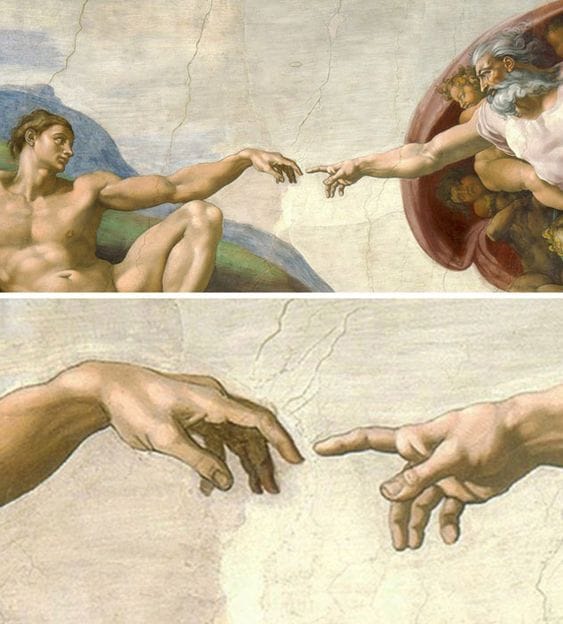
Why is it important to know our Divine connection with God?
The energy that animates you does not vanish; it transforms and moves on.
You are not just flesh. You are a dynamic field of energy.
Spiritually, this aligns with the concept of the soul.
Every human body is a vibrating system of energy.
At the most basic level:
Atoms are mostly empty space, but the charged particles (protons, electrons) create electromagnetic fields.
Every thought, feeling, and action produces electrical signals in the brain and nervous system.
Even the heart generates a measurable electromagnetic field that can influence the body and surroundings.
Energy Cannot Be Destroyed.
Science tells us that energy cannot be created or destroyed, it only changes form (First Law of Thermodynamics).
Heat, light, sound, chemical reactions and all forms of energy are transformations, not annihilation.
If your body dies, the physical energy is redistributed: chemical energy fuels decomposition, electrical signals cease, but the essence of your energy persists in some form.
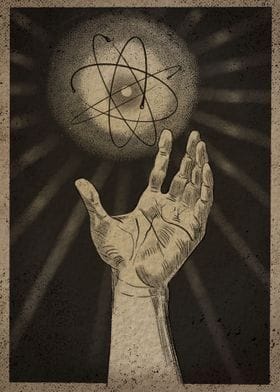
Now considering those who claim to believe in "nothing"... Just as electricity in a circuit flows toward a conductor, the soul’s energy will move toward alignment.
Toward Good if connected, or toward lesser forces if neglected.
Their lives may be lived without conscious alignment, without moral or spiritual grounding.
Their energy, when freed from the body, is unguided, lacking direction toward the One True Source of all Good.
Belief, faith, and conscious alignment act like a magnet or conduit for your energy.
Without it, your energy can drift, diffuse, or be attracted to forces that do not serve goodness.

Atheism: A lack of information
Atheism is not a victory over superstition, it is a symptom of incomplete understanding.
Science does not oppose God, it reveals His handiwork.
Atheism is often ignorance dressed in confidence.
True wisdom does not fear science; it uses science to perceive God more clearly, seeing that the laws of nature, the vastness of the cosmos, and the miracle of life all testify to the One Source of all good.
Atheism (the belief that there is no God) has grown in popularity over the past few centuries, especially in modern, technologically advanced societies.
On the surface, this seems like a triumph of reason: humans relying on observation, logic, and evidence instead of myths, rituals, or clerical authority.
Why Atheism Became Popular:
Scientific Revolution & Enlightenment
As humanity discovered laws of physics, biology, and chemistry, many felt less need for God as a “mechanic” of the universe.
Rationalism celebrated human reason and doubted traditional religious authority.
Rejection of Corrupt Institutions
Many people saw churches, temples, and religious authorities abusing power, covering crimes, or controlling societies.
Disillusionment with ritual, hierarchy, and hypocrisy pushed some toward atheism.
Cultural Individualism
Modern society prizes autonomy and skepticism.
Religion can feel like social control, so rejecting it becomes a badge of independence.
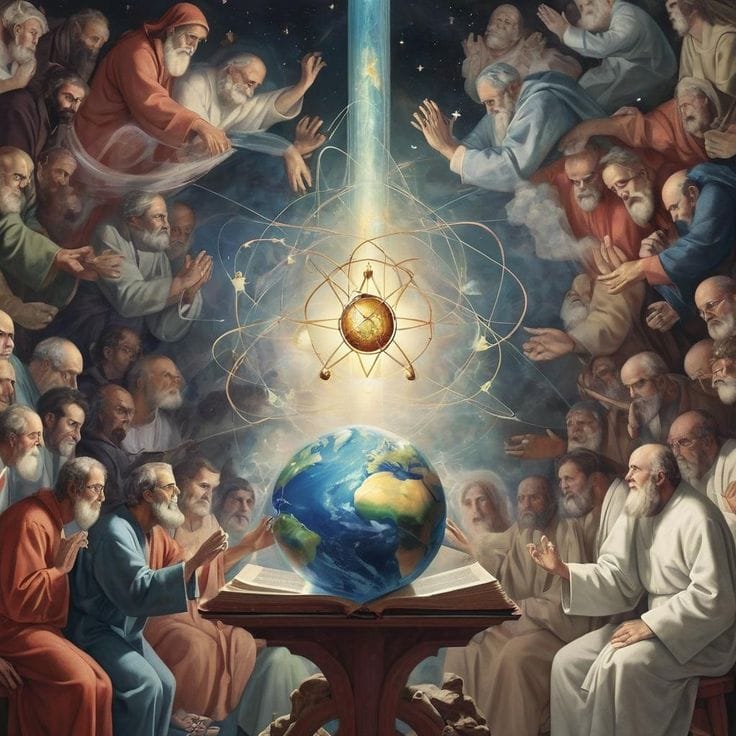
The Danger of Separating Science from God
The laws of the universe, the beauty of physics, the structure of DNA, the vastness of the cosmos, the fine-tuning of life itself… these are not evidence against God.
They are evidence of an intelligent, purposeful source.
When humans separate science from God, two dangers arise:
1. Moral Disorientation
Without the framework of goodness grounded in God, humans can admire the universe but ignore ethical responsibility.
Knowledge without moral grounding risks turning power into harm.
2. Confusion & Spiritual Blindness
Seeing God as unnecessary ignores the hidden layers of meaning that science cannot quantify: love, conscience, purpose, and ultimate justice.
Atheism then becomes not true rationality, but a refusal to integrate knowledge with moral and spiritual insight.
People think they have abandoned illusion, when in fact they have abandoned insight into the source of all reality.
The One True God is not only compatible with science. He is the science. He is the creator.
The universe is not random chaos but an intelligible order. Understanding the stars, the genome, or quantum mechanics only deepens awe of the Source. Science explains how God works, religion explains how to align with God. When they are separated, knowledge becomes sterile, and morality becomes optional.
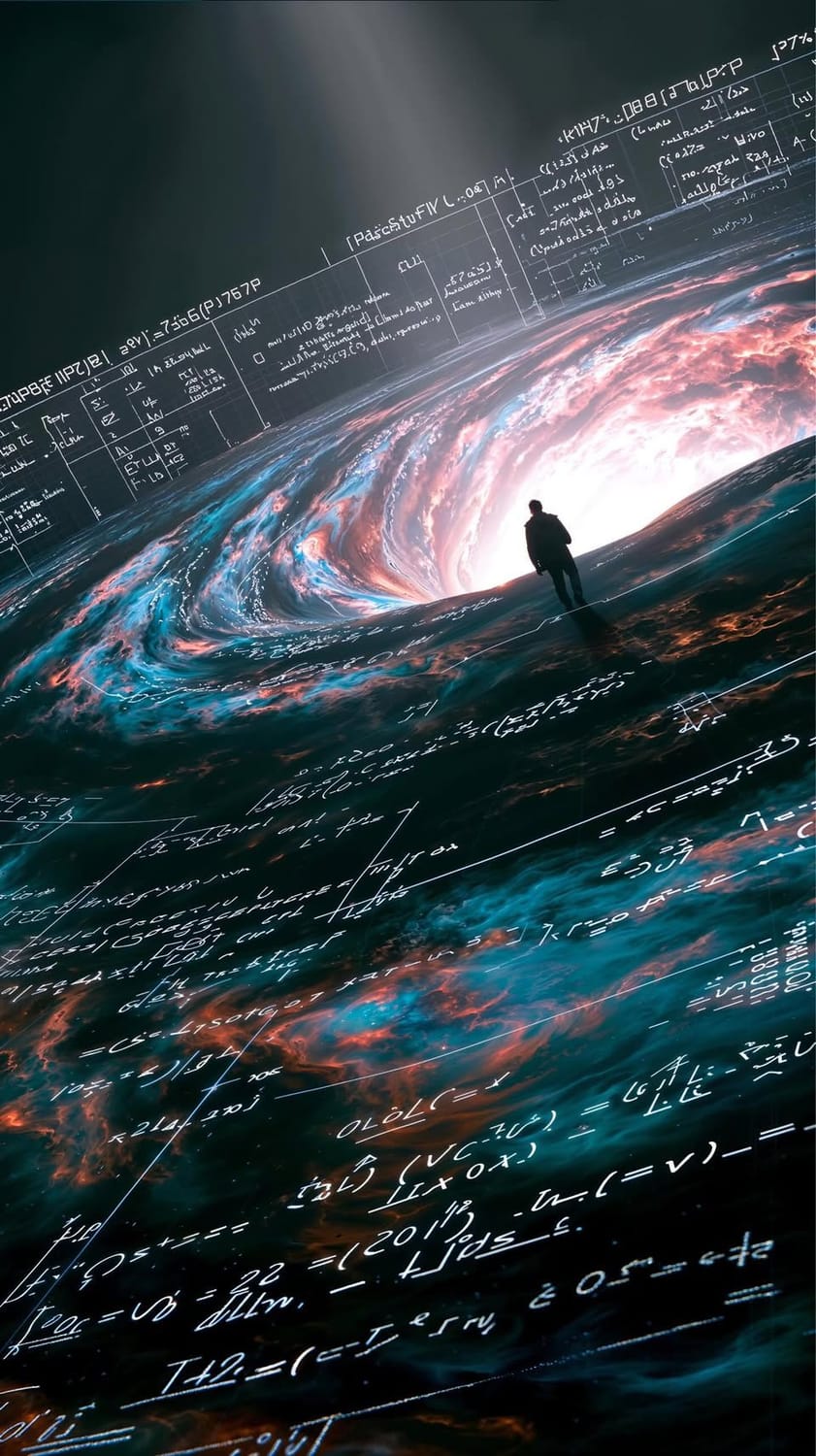
To Know God, You Must Know Science and History
The path to the One True God is not blind devotion, it is awareness, observation, and discernment.
Science and history are not distractions from God; they are tools to understand the universe God created and the truth God revealed through humanity.
Science shows the structure, order, and intelligence of the universe. Energy flows, atoms vibrate, life obeys intricate laws, all pointing to a conscious, intelligent Source. Understanding these laws allows us to see God in physical action, not as abstract faith but as living reality.
History shows God's interactions with humanity and how truth has been transmitted, challenged, or distorted. By studying the past, we learn which teachings align with goodness and which systems misdirect devotion.
Jesus: Historical Documentation and Moral Revolution
Jesus of Nazareth is not just a figure of faith, he is well-documented historically, appearing in sources like Josephus, Tacitus, and Roman records. Even stripped of miracles, his life demonstrates a radical moral and spiritual truth:
He rejected blind adherence to ritualistic law when it conflicted with justice, mercy, and love.
He encouraged direct communion with God, bypassing intermediaries, priests, or hierarchy.
His teachings emphasized love, compassion, and personal responsibility, showing that connection to God is experiential, conscious, and ethical — not about following social or institutional expectation.
In other words, Jesus provides a template: seek God directly, understand creation, and live morally. Knowledge — scientific, historical, and spiritual — is the conduit that allows our energy to align with Good rather than drift into darkness.
To truly serve the One True God:
Observe the universe with science to see His order.
Study history to understand how truth has been preserved or distorted.
Seek God directly, as Jesus taught, rather than through rituals, institutions, or fear.
Align your energy, your actions, and your mind with the Source of all Good.
The Two Ultimate Powers: Good vs. Evil
At the deepest level, the world is governed by two forces:
1. The One True God — the Source of all Good
Infinite love, truth, justice, and wisdom.
The foundation of morality, peace, and spiritual alignment.
2. All Others — the Forces That Lead to Evil
Ideologies, rituals, powers, or systems that misdirect devotion, enforce fear, or compromise conscience.
Anything that distracts from truth, diminishes love, or enslaves the spirit.
The choice is unavoidable. Every thought, every action, every allegiance leans toward one of these two powers.

What to do?
Seek the One True God directly — beyond rituals, institutions, and social belonging. Let your connection be personal, conscious, and ethical.
Observe where devotion is misplaced — beware of religious or cultural structures that demand obedience over moral clarity.
Align your actions with goodness — love, justice, mercy, and truth are the markers of the divine.
Use knowledge wisely — science, learning, and insight are tools to perceive God more clearly, not substitutes for devotion.
Reject fear as a guide — the One True God does not need coercion; if a belief system relies on fear, it is steering you away from the Source.
In the end, life is a moral compass pointing toward one of two poles. Stand consciously, choose alignment with the Source of all Good, and let your love, clarity, and actions be your true worship. Everything else leads toward darkness and your own destruction.
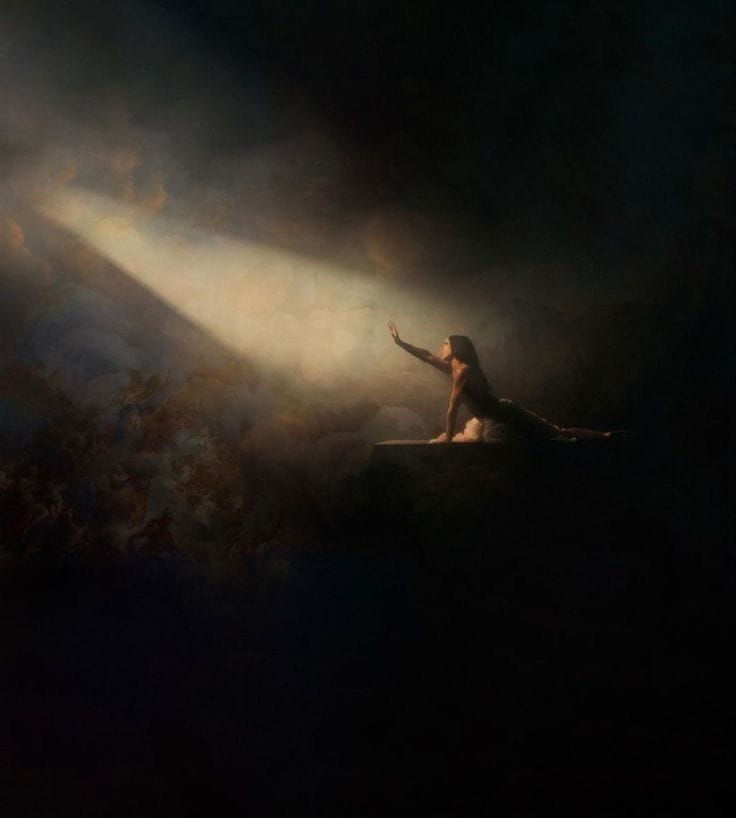
When knowledge, awareness, and spiritual alignment converge, your energy flows toward Light.
Without it, it drifts, susceptible to the lesser forces of the world.
The choice is yours, and it is eternal.

A curated Digital Atelier.
All Rights Reserved.