
Folklore Truths Disguised as Myths
Vampires, werewolves, sirens are all ancient truths we buried under fantasy…
Before folklore was entertainment, it was documentation. Before myths were softened into fantasy, they were warnings, metaphors, and memory encoded in story so truth could survive time, censorship, and illiteracy.
What we now call “myth” once explained moral law, spiritual danger, psychological shadows, and encounters with forces humanity didn’t yet have language to name. When taken seriously, these stories reveal a consistent message across cultures: not everything unseen is imaginary, and not every truth is safe to speak plainly.
Folklore is often dismissed as superstition. Stories invented to scare children, explain nature, or entertain bored civilizations.
But history tells a different story.
Many so-called “myths” exist across unrelated cultures, centuries apart, with eerily consistent details.
That doesn’t happen by accident.
Why Ancient Cultures Spoke in Myth
Ancient societies didn’t separate the spiritual from the physical. Reality wasn’t limited to what could be measured: it included consciousness, symbolism, the unseen, and the moral order of the world.
Myth served three purposes:
To preserve truth without provoking authority
To encode psychological and spiritual realities
To warn future generations without direct confrontation
Scripture does the same thing.
Jesus taught in parables.
Prophets spoke in visions.
Genesis opens with symbolic cosmology.
Myth is not the opposite of truth.
It’s truth wearing protection.
Entities Preserved by Story
Vampires: Blood, Life, and Forbidden Immortality
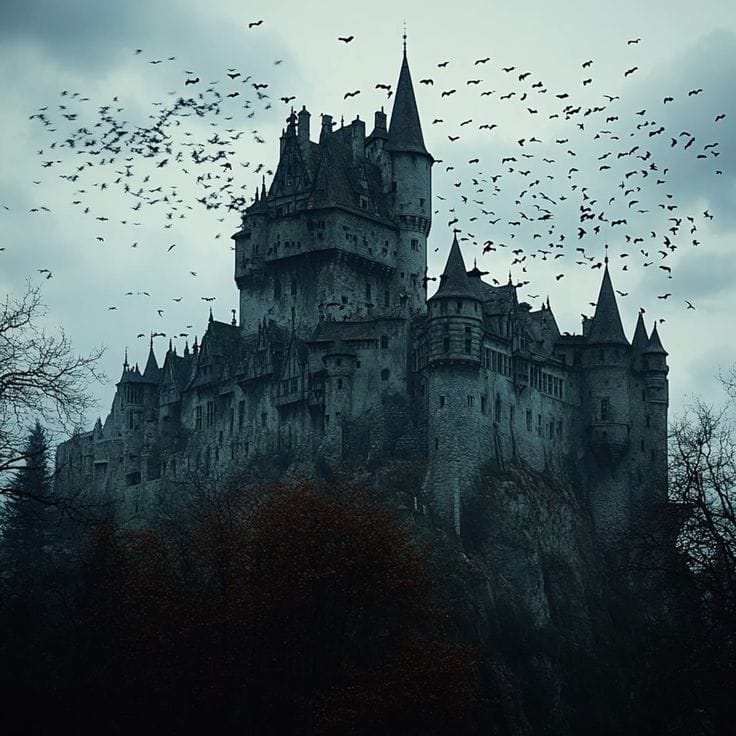
Vampirism, long reduced to gothic fiction, originates in documented medical, psychological, and historical phenomena rather than pure imagination. Conditions such as porphyria, which causes light sensitivity, gum recession (making teeth appear elongated), anemia, and aversion to sunlight, fueled early vampire accusations across Europe.
Reinforced beliefs in the undead in times of plague and mass death, societies externalized fear through the vampire myth: a figure that survives by draining life when communities are already weakened. What folklore framed as supernatural predation, history reveals as humanity grappling with disease, death, and the terror of life being taken faster than it can be restored.
Vampire legends appear in: Eastern Europe, Mesopotamia,
Ancient Greece, China, Pre-Columbian Americas, etc.
Long before Dracula.
What stays consistent?
Blood as life force
Fear of the undead
Aversion to light
A parasitic existence
Immortality without peace
Blood has always been understood as more than biology.
The Bible is explicit:
“The life of the flesh is in the blood.”
— Leviticus 17:11
Consuming blood was forbidden in Mosaic Law.
Blood represented ownership of life, which belonged to God alone.
Vampire mythology reflects the ancient fear of life stolen instead of given existence prolonged through consumption rather than creation.
Immortality, achieved the wrong way, becomes curse instead of blessing.
This isn’t fantasy.
It’s theology in narrative form.
Werewolves: The Beast Beneath the Man
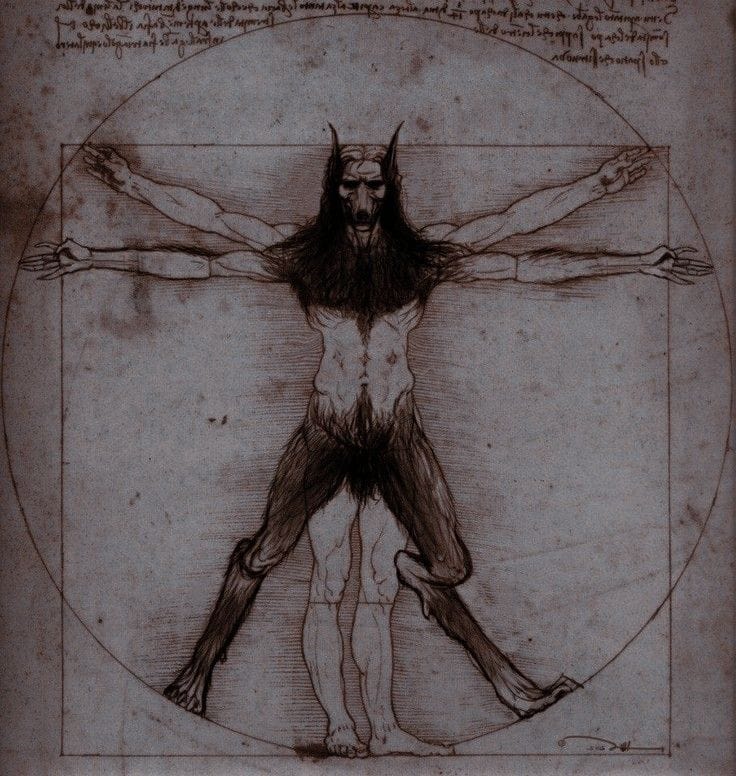
Lycanthropy, the belief that a human has transformed into an animal, is not merely a folkloric invention but a phenomenon with documented psychological and medical roots. In clinical terms, clinical lycanthropy refers to a rare psychiatric condition in which an individual experiences the delusion of becoming an animal and begins to behave accordingly, often mimicking its movements, diet, and social withdrawal.
Before modern psychiatry existed, such episodes were interpreted through cultural and spiritual frameworks, transforming observable behavioral regression into stories of physical metamorphosis. Hair growth from neglect, hardened nails, altered posture, aggression, and nocturnal behavior reinforced the illusion of transformation, especially in eras where disease, trauma, and psychosis were poorly understood.
Over time, myth externalized what science later identified as internal collapse: the loss of rational control and social identity.
Werewolf legends, then, are not proof of humans becoming beasts in body, but of what happens when the structures that regulate humanity (reason, morality, and self-awareness) fracture, allowing instinct to dominate consciousness.
Stories of humans transforming into animals appear in: Norse sagas, Roman texts, Celtic folklore, Native American traditions, Ancient Greek mythology, among others.
The transformation is almost always triggered by:
Rage
Hunger
Loss of control
The moon (cycles, not randomness)
The Bible talks about King Nebuchadnezzar becoming a beast kind of situation:
Historically and medically, Nebuchadnezzar’s condition aligns most closely with boanthropy, a rare and documented form of clinical lycanthropy in which an individual believes themselves to be an animal and begins to behave accordingly. Modern psychiatry understands this as a severe dissociative and psychotic regression, often triggered by extreme stress, grandiosity, or psychological collapse.
Ancient civilizations lacked clinical terminology, so such loss of reason was described through observable behavior rather than diagnosis: withdrawal from society, abandonment of speech, consumption of raw vegetation, neglect of the body, and complete erosion of social identity.
Transformation myths warn what happens when
humans abandon restraint, morality, or spiritual authority.
The beast was never outside.
It was unintegrated humanity.
Werewolves are not just about animals.
They are about instinct ungoverned by conscience.
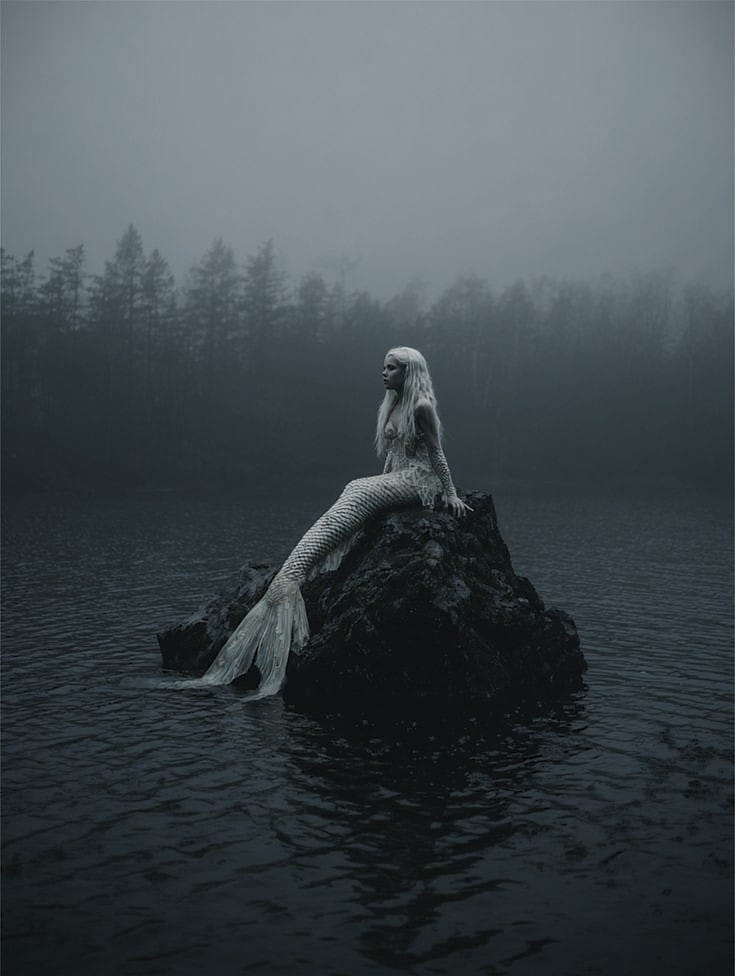
Sirens: Seduction as Destruction
In ancient apocalyptic texts such as the Book of Enoch, beings later translated as sirens are not romantic sea creatures but disembodied female spiritual entities linked to transgression, seduction, and desolation.
These entities are associated with the spirits of women who were connected to the Watchers’ or fallen angels rebellion either as participants, offspring, or consequences of forbidden unions.
While the Ethiopic texts do not use the modern word siren explicitly, later translators used “sirens” as the closest available term to describe female spirits who lured humanity away from order, and exist outside divine hierarchy.
Sirens appear in Greek mythology as creatures whose beauty and voice lead sailors to death.
They don’t chase.
They don’t force.
They invite.
This is one of the oldest psychological warnings in history.
Scripture echoes it precisely:
“Each one is tempted when he is lured and enticed by his own desire.”
— James 1:14
Sirens represent temptation that feels divine, artistic, transcendent... yet leads to annihilation.
The danger isn’t ugliness.
It’s beauty without wisdom.
What is statistically significant is the global consistency of mermaid lore. Stories of humanoid sea beings appear across: Europe, Africa, Asia, Oceania, The Caribbean, etc.
This consistency across unrelated cultures suggests that mermaid legends aren’t isolated myths, they are a shared human response to the mystery of the ocean, shaped by geography, psychology, and the sea’s unknowability.
Key Regions With Strong Mermaid Legends & Reports
1. Mediterranean Coast — Kiryat Yam, Israel
Modern eyewitness accounts of mermaid-like creatures off the Mediterranean shore have circulated since the 2000s, attracting media attention and even a posted reward for proof of existence.
2. British Columbia & Mayne Island, Canada
Several sightings dating back decades describe humanoid figures near the water, leading to local fascination and even reward offers.
3. Scotland & Northern England
Some of the oldest European mermaid lore comes from places like Benbecula (Outer Hebrides) in the 1800s and coastal Scotland, where witnesses claimed to see mermaid-like beings near the shore.
4. Aegean & North Seas (Greece, Turkey, Northern Europe)
Ancient authors like Pliny the Elder recorded strange aquatic beings in the waters off Western Europe, while classical myths in the Aegean Sea link marine spirits to historical figures.
5. Eastern Europe — Rusalkas
In Slavic tradition, rusalki are water spirits associated with lakes and rivers, often tied to stories of drowned women who lure the living with song, a template similar to mermaid lore.
6. Indonesia — Orang Ikan (Fish People)
In the Kei Islands folklore and reported encounters by Japanese soldiers in 1943, the orang ikan are described as humanoid aquatic beings, part of regional myth and reported sightings.
7. Zimbabwe & Africa
Reports (including ones linked to construction sites like dams) and strong local beliefs make mermaid spirits significant in some African folklore traditions.
8. Caribbean & Polynesia
Oral traditions in many island cultures include sea-spirits or mermaid-like beings, and anecdotal sightings are reported in places like the Caribbean and Pacific islands.
9. England — Blakemere Pond & Legendary Sites
Local folklore connects certain lakes and ponds in England with mermaid hauntings, often tied to ghost stories and historical lore.
10. Isle of Man & Irish Sea Regions
Legends of mermaid-like beings interacting with fishermen and coastal communities are part of regional lore, with stories passed down over generations.
Giants, Nephilim, and the Line We Don’t Like to Talk About
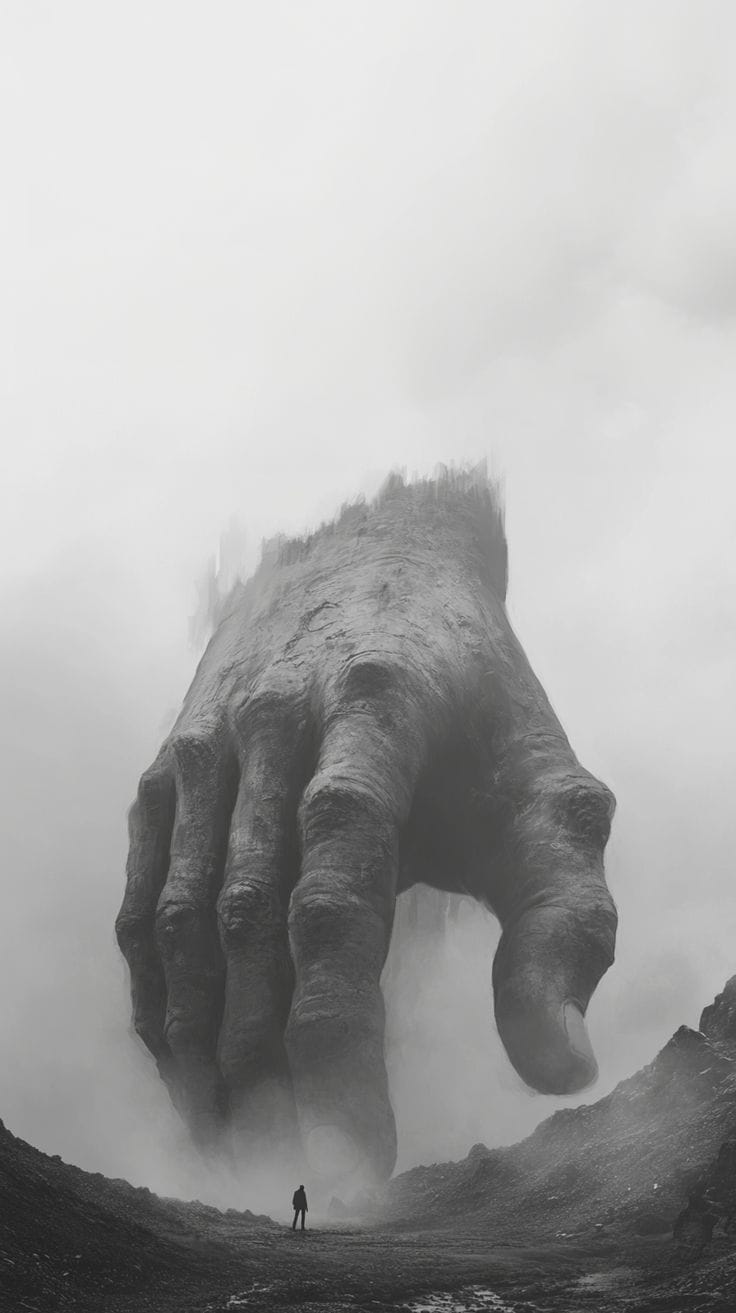
Modern culture reframed giants as fantasy because the alternative is destabilizing. It challenges the idea that humanity has always been alone at the top of the hierarchy.
Ancient people were not naïve; they recorded what they understood through the language available to them. Scripture goes further and issues a warning: when divine order is violated, creation itself fractures.
Giants, in this sense, are not merely beings of size, but symbols of boundaries crossed, power taken without permission, and knowledge wielded without wisdom. Myth preserved the memory. Scripture preserved the meaning. And both insist on the same truth: not every ancient story was meant to entertain, some were meant to warn.
Every ancient civilization tells stories of:
Giants
Demi-gods
Hybrid beings
Fallen watchers
Gods mating with humans
One of the most uncomfortable intersections of myth, scripture, and history is the recurring theme of giants, as beings described with startling consistency across cultures.
The Bible does not speak of them metaphorically:
“There were giants in the earth in those days; and also after that…”
— Genesis 6:4
This passage is directly tied to the Watchers—angelic beings described in the Book of Enoch as assigned to observe humanity, who instead transgressed divine boundaries. These Watchers descended, took human wives, and produced hybrid offspring known as the Nephilim: beings described as immense in stature, strength, and corruption. Their existence was not merely physical but destabilizing: they distorted human knowledge, warfare, sexuality, and power structures.
What makes this unsettling is not the text itself, but its echoes.
Every ancient civilization preserves parallel accounts:
Sumerian tablets speak of the Anunnaki—divine beings interacting with humans
Greek mythology records Titans and demi-gods
Mesoamerican lore describes previous ages ruled by giants
Biblical texts acknowledge giants both before and after the Flood
These cultures were geographically isolated, yet their stories align on the same core elements: non-human intelligences, hybrid beings, and catastrophic consequences.
As for physical evidence, throughout history there have been persistent reports of unusually large skeletal remains, megalithic structures that defy conventional explanations, and petrified forms attributed by local traditions to giants.
While mainstream archaeology disputes many claims and reclassifies findings as misidentifications or hoaxes, the sheer volume of global accounts raises a quieter question: not whether every claim is true, but why the idea appears everywhere. Myth does not require bones to persist, only memory.
Modern culture reframed them as fantasy because the alternative raises questions we aren’t comfortable asking.
But ancient people weren’t confused.
They were recording something they believed happened.
Why These Myths Were Demonized or Infantilized
As religion centralized and empires stabilized, certain stories became inconvenient.
Myths that:
Challenged moral authority
Exposed spiritual danger
Suggested cosmic rebellion
Revealed uncomfortable origins
…were either demonized or trivialized.
Turn warnings into fairy tales.
Turn memory into metaphor.
Turn terror into entertainment.
And eventually, people forget they were ever real.
The Pattern Beneath Every “Myth”
“For we wrestle not against flesh and blood, but against principalities, against powers, against the rulers of the darkness of this world, against spiritual wickedness in high places.”
— Ephesians 6:12 (KJV)
The Bible doesn’t dismiss these beings as fantasy; it reframes them. Scripture repeatedly acknowledges spiritual entities, principalities, powers, and forces that operate beyond the visible world. Real influences that tempt, distort, and deceive.
What folklore personifies as vampires, werewolves, sirens, or giants, the Bible names as spiritual forces that lure humanity away from order, restraint, truth, and life itself. They do not rule dimensions independently; they exist within creation, not above it.
God alone is the Creator of all realms—seen and unseen—and the only source that gives life without taking it, power without corruption, and wisdom without seduction. Folklore warns. Scripture reveals. And both, in their own language, point humanity back to the same truth: discernment is survival, and alignment with the Creator is freedom.
Vampires warn against stealing life.
Werewolves warn against losing restraint.
Sirens warn against desire without discernment.
Giants warn against boundaries crossed.
Different stories.
Same message.
Humanity has always known:
There are forces seen and unseen
There are laws beyond physics
There are consequences beyond death
Myth is not primitive ignorance.
It is ancient intelligence, preserved poetically.
The modern world believes it has outgrown myth.
In reality, it has simply forgotten how to read it.
The Bible, folklore, and ancient texts are different dialects of the same warning:
Not everything powerful is good.
Not everything beautiful is safe.
And not everything ancient was imagined.
Truth survives best when disguised.
And the oldest stories are still whispering, for those who know how to listen.

A curated Digital Atelier.
All Rights Reserved.